 Zero Pest
From £220
How Do You Know If You Have Bed Bugs in Greenwich?
Almost everybody who calls us starts with bites, and bites are the least reliable evidence there is. This guide is about what actually settles the…
Read the guide →Bed Bug Control advice
A reference rather than a checklist. The insect at every life stage, every mark it leaves, what each one rules in and out - and the four things people most often mistake for it.
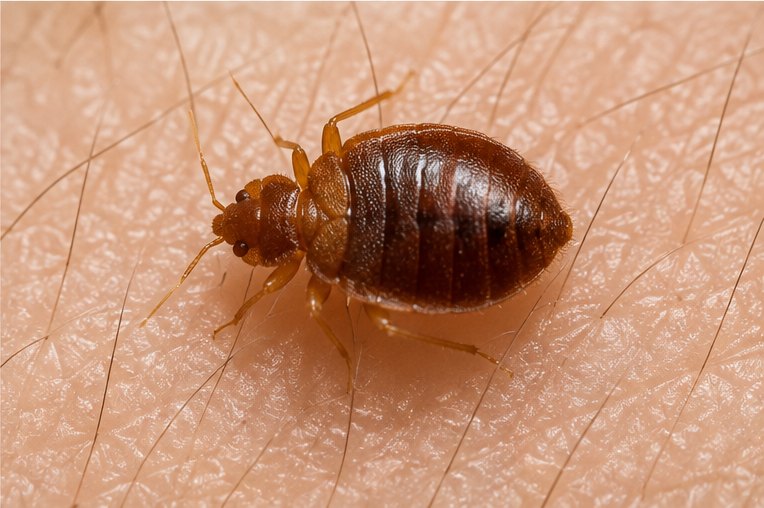
What to look for: flat, oval, reddish-brown, and often described as about the size and shape of an apple pip. Wingless. After feeding it is noticeably rounder and darker, which is why two insects from the same bed can look like different species.
What it tells you: everything - a live adult in the seams is conclusive. It also tells you the infestation is not new, because adults take time to develop.
What it rules out: anything with wings, anything fast-moving across an open floor, and anything hairy. Carpet beetle larvae are bristly; bed bugs are smooth.
What to look for: the same shape as an adult but much smaller and considerably paler - almost translucent before feeding, and visibly red afterwards. The youngest are very small indeed and easily missed without a torch.
What it tells you: that breeding is happening in the property, which is different from a single insect having arrived on a bag. Finding nymphs raises the priority.
What to look for: pale, hollow, perfectly bed-bug-shaped casings, empty and light. In the seams, the frame joints, behind the headboard and in the folds of the base fabric.
What it tells you: that insects have been growing here, which means an established population rather than an arrival. This is frequently the first hard evidence a householder finds, because the skins stay put and the insects do not.
What to look for: small dark spots on the mattress, the base fabric, the sheet or the wall behind the bed. Digested blood. It soaks into fabric and marks it rather than sitting on the surface.
What it tells you: a feeding site or a harbourage close by. A concentration of spotting in one corner of a mattress usually means the harbourage is in that corner or in the frame beneath it.
What it rules out: spots that brush or wipe off are dirt. Mould marks are usually greyer, more diffuse and smell different.
What to look for: tiny, pale, elongated and cemented into a crevice rather than lying loose. Usually in clusters, and usually deep in a seam or a joint.
What it tells you: why a single treatment is rarely the whole job. Eggs are much more resistant than the insects that laid them, and the follow-up visit exists for what hatches after the first treatment.
What to look for: a sweetish, musty, slightly almond-like smell in a room with a heavy infestation.
What it tells you: that the population is substantial. It is not a reliable early sign - most people never notice it - so its absence means nothing at all.
The order matters. It runs outward from the bed, because that is how an infestation actually spreads, and it means that if you find nothing in the first four you can reasonably stop.
If you find one, keep it. Put it in a clear bag or a small pot rather than destroying it, and photograph it against something for scale. A confirmed identification changes the treatment plan, and it occasionally means no treatment is needed at all.
Different findings point at different amounts of work, which is worth knowing because the price follows the room count:
Four steps, and the first one is the one people get wrong.
Send the photograph with the enquiry. Identification decides whether this is a bed bug job, a carpet beetle job, a flea job or nothing at all - and those are four different pieces of work at three different prices.
An adult is often described as about the size and shape of an apple pip - flat, oval and reddish-brown. Nymphs are much smaller and considerably paler, and the youngest are easily missed without a torch.
They are shed skins, and they are very good evidence - better in some ways than finding a live insect, because they stay put. They also indicate a population that has been growing rather than a single arrival.
If they are short, bristly and banded, yes. The hairiness is the giveaway - bed bugs are smooth and flat. Carpet beetle larvae also damage wool and fabric, which bed bugs never do.
No. They cannot do either. Anything jumping is more likely to be a flea, and anything flying is something else entirely.
In a heavy infestation some people notice a sweetish musty smell. It is not a reliable early sign and most people never notice it, so its absence tells you nothing.
The rest of the bed bugs advice centre, and the service page it all links back to: Bed Bug Control Greenwich.
Almost everybody who calls us starts with bites, and bites are the least reliable evidence there is. This guide is about what actually settles the…
Read the guide →Bed bugs are the one treatment where what you do before and after the visit changes the outcome as much as the treatment itself. Here is the whole…
Read the guide →Bed bug treatment is £220 for the first room and £120 for each additional one - the highest rates on this site. This guide explains what that buys,…
Read the guide →Treated, clear for a fortnight, and then biting again. There are only three explanations, and telling them apart matters - because two of them mean…
Read the guide →Tell us what you have seen and where in the property you found it, and we will confirm the service and the price before anything is booked.
£220 for the first room and £120 for each additional room. Call 020 3369 0124, send the enquiry form or message us on WhatsApp.