 Zero Pest
Flats £190 | Houses £240
How Do You Know If You Have Mice in Greenwich?
Most mouse problems are well established before anybody calls, and the reason is not carelessness. The evidence is small, scattered and…
Read the guide →Pest Control Greenwich
A mouse is not a small rat, and treating it like one is why so many mouse problems come back. Mice nibble in many places instead of feeding in one, nest in several spots at once rather than a single burrow, and get through openings nobody would think to look at. The treatment reflects that.
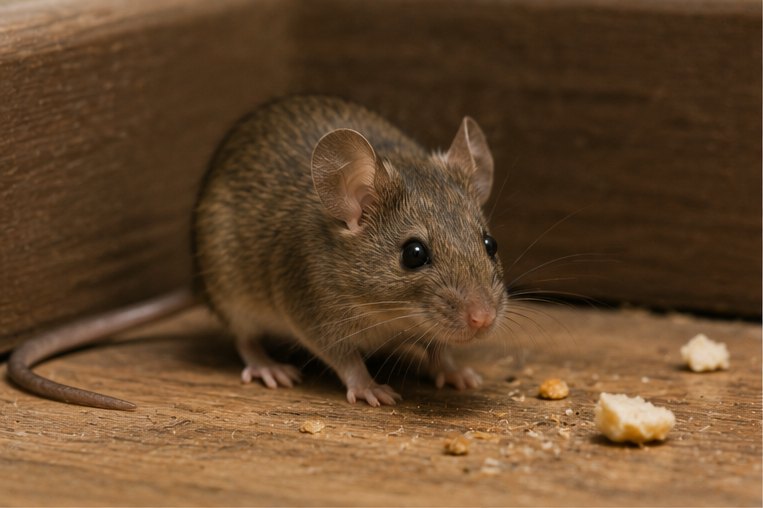
Mouse evidence is smaller, more scattered and easier to dismiss than rat evidence, which is exactly why it tends to be well established before anyone calls. Look for:
Three differences change the whole job. First, mice sample food in very small amounts at many points rather than feeding heavily in one place, so control has to be distributed across the routes they use instead of concentrated where the droppings look worst. Second, mice are inquisitive about new objects rather than suspicious of them, which is the opposite of a rat and changes how quickly you would expect to see a result. Third, a mouse colony will maintain several nesting sites in one property at the same time, so finding one nest is not the same as finding the problem.
Clearing the mice you can see and leaving the rest of the network intact is why a kitchen goes quiet for a fortnight and then does not.
Shop-bought bait and the plug-in devices. Retail bait put down in one corner of a kitchen deals with whichever mice happen to use that corner. Ultrasonic plug-ins are widely sold and there is no good evidence they clear an established mouse population. If you have already tried both, say so - it tells us how the property has been treated and what the mice have learned to avoid.
Zero Pest Greenwich publishes its standard treatment prices, so you can see the cost before you contact anybody.
| Mouse Control in Greenwich | Published price |
|---|---|
| Flat or apartment | £190 |
| House | £240 |
Mouse control is priced by property type for the same reason as rat control: a flat is a contained space, while a house adds a subfloor, a roof void, an external envelope and outbuildings, all of which have to be looked at.
Where mice are getting in through a hole that can reasonably be closed, proofing is quoted separately so you can see the cost of the treatment and the cost of the repair as two different things.
The survey maps where activity is concentrated: which cupboards, which appliances, whether the kitchen is the source or simply the feeding area, and where the runs pass between rooms or between floors. In flats that usually means looking at service risers, boxed pipework and the gaps around waste pipes, because that is how mice move through a building without ever crossing a room.
Control is then placed along those runs, in secured points, in enough locations to reach the whole network rather than the visible part of it. The follow-up matters as much as the placement: what has been taken and where tells us whether the treatment has reached everything or whether there is a second nesting site still in play.
Mice need remarkably little room to pass through a hole. Rather than quote a figure at you, the practical test is the one we use on site: if you can push a pencil into a gap, treat it as a route until proven otherwise.
Much of the housing across Greenwich, Charlton and Plumstead is terraced or converted, and mice make full use of that. A shared subfloor or a continuous ceiling void between flats means the population is a building population, not a flat population. If your neighbours have mentioned the same thing, tell us - it changes where the work needs to be done and it is far better established before the first visit than after the third.
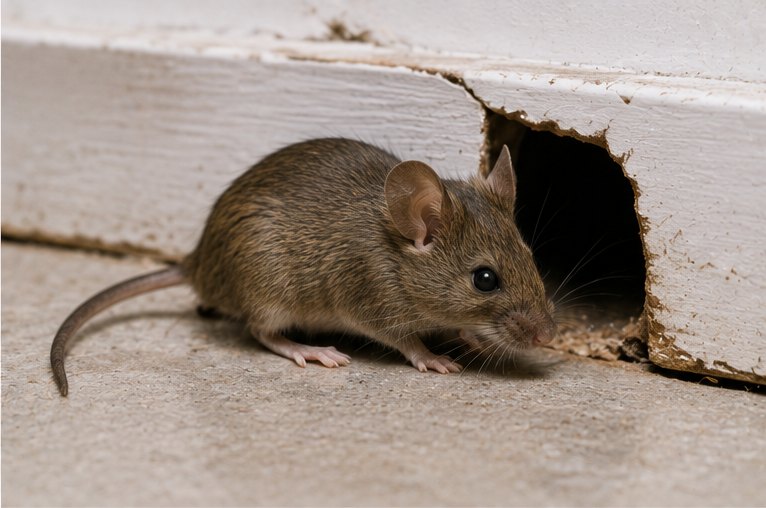
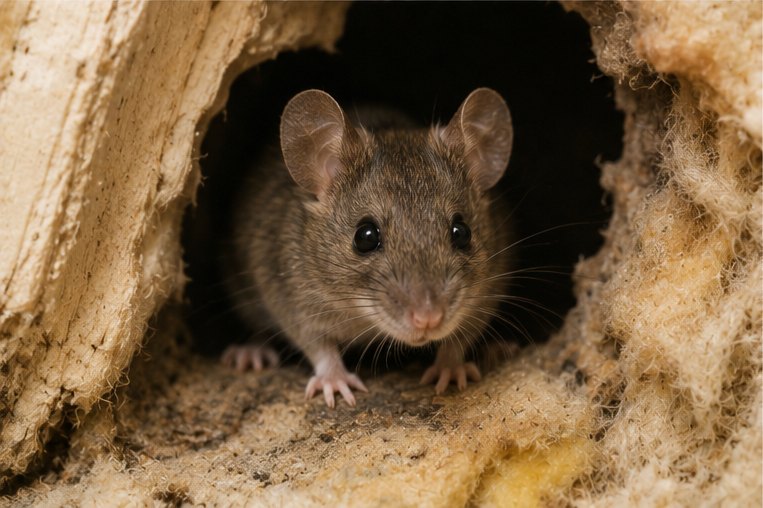
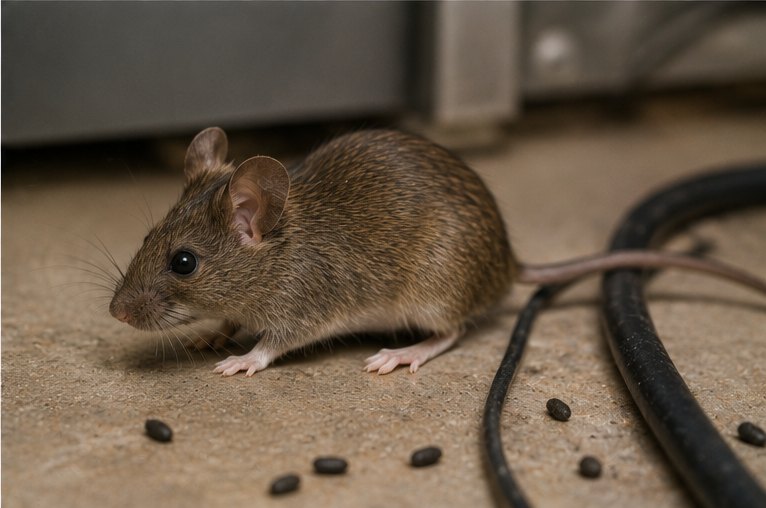
The same service, described for the three situations it is most often booked in.
Tell us which cupboards the droppings are in, whether the noise is behind a wall or above a ceiling, and whether anything has been tried already.
Mouse activity in a flat is very often a building-wide issue rather than a housekeeping one. We will report where the routes are, which matters when the conversation moves on to who is responsible for closing them.
Kitchens, storerooms, suspended ceilings and cable voids. Tell us the type of premises and where the evidence is being found.
Mouse Control has its own page for every area we cover, each with the same published price and the detail that actually applies to that area’s buildings.
Five guides for this service are being written for the Zero Pest advice centre.
Most mouse problems are well established before anybody calls, and the reason is not carelessness. The evidence is small, scattered and…
Read the guide →Almost everyone tries something before they call, and almost everyone tries the same thing: a trap or a bait point where the droppings…
Read the guide →Mouse control is £190 for a flat and £240 for a house - the same figures as rat control, for a job that is not the same at all. This guide…
Read the guide →A reference rather than a checklist. Every sign a mouse leaves, what it actually looks like, what it tells you, and what it rules out -…
Read the guide →Every autumn, in the same house, in the same cupboard. Or a fortnight of quiet after a treatment and then droppings again. Both are common,…
Read the guide →No. Mice are naturally active at night and a colony can be well established without ever being seen in daylight. Daytime sightings usually indicate a larger population rather than a smaller one, because it means the animals are competing.
There is no good evidence that ultrasonic devices clear an established mouse population, and we do not sell or recommend them. If you have one running, it is worth telling us, simply so we know what has already been tried.
A cat may reduce activity in the rooms it patrols. It will not reach a nesting site inside a wall or under a floor, which is normally where the problem actually lives.
Mice investigate new objects readily, so uptake usually begins quickly. What takes the time is reaching the whole network rather than the part of it you have noticed, which is what the follow-up visits are for.
Greenwich, Blackheath, Woolwich, Eltham, Charlton, Plumstead and Abbey Wood.
Yes, and it is one of the more common enquiries we take. The published price means the applicable figure can be checked before the instruction is given.
Yes. Contact us with the type of premises and a description of where activity is being found.
Call the office or send the enquiry form, and tell us where the droppings are, when you hear activity and whether the property is a house or a flat.
Every service has its own page with its own published price.
Tell us what you have seen, where in the property you found it and whether it is a house, a flat or commercial premises. We will confirm the service and the price before anything is booked.
Flats £190 | Houses £240. Call 020 3369 0124, send the enquiry form or message us on WhatsApp.