 Zero Pest
£280 trapping service
How Do You Know If You Have Grey Squirrels in Greenwich?
One question settles this more reliably than anything else, and you can answer it tonight: what time of day do you hear it? Squirrels are…
Read the guide →Pest Control Greenwich
Squirrel work is different from every other service on this site, because the law decides how it is done. A grey squirrel is a non-native species and it cannot lawfully be caught and released somewhere else. That single fact shapes the whole job, and you should know it before you book rather than after.
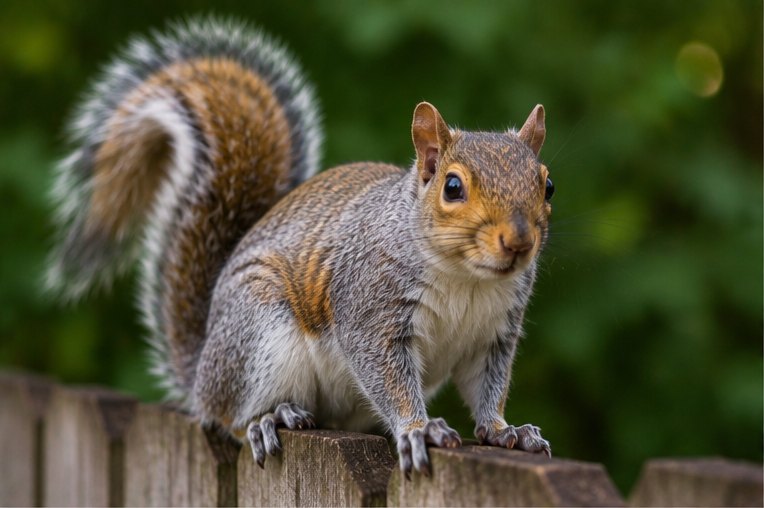
The grey squirrel is a non-native invasive species in Great Britain. It is an offence to release a grey squirrel back into the wild or to allow one to escape, which means that catch-and-release - the thing almost everybody asks about first, and asks about for entirely decent reasons - is not something we or any other company can lawfully offer. Anyone who offers to catch your squirrel and let it go in a park is either misinformed or telling you what you want to hear.
Trapping also carries its own duties: traps must be of an approved type used in the way they are approved for, and they have to be checked frequently so that nothing is left in one. That is a large part of why squirrel work is a programme of visits rather than a single call-out, and why it is priced as a trapping service rather than as a treatment.
This is a description of how the work is carried out, not legal advice. If you need a definitive position on the law as it applies to your circumstances, take proper advice. What we can tell you is how Zero Pest Greenwich operates: lawfully, humanely, and without pretending that a relocation option exists when it does not.
Zero Pest Greenwich publishes its standard treatment prices, so you can see the cost before you contact anybody.
Squirrel control is priced as a trapping service rather than as a single treatment, because that is genuinely what it is: siting traps, checking them on the required schedule and returning until activity has stopped. One figure covers the programme.
Proofing the entry point is a separate service and is carried out after the loft is confirmed clear - never before. Where the roofline damage needs a roofer rather than a proofing visit, we will say so.
The survey establishes how many animals are likely to be present, where they are getting in, whether there is a nest with young, and what damage has already been done to cabling and insulation. Access at the roofline is the crucial part: squirrels reach a roof along fences, cables and overhanging branches, and they enter at a weak point rather than making one from nothing.
A trapping programme then runs over a series of visits, with traps sited where the animals are actually moving and checked on the required schedule. Once activity has stopped, the entry point is closed - and the order of those two things is not negotiable.
It is the most common and the most damaging DIY mistake in squirrel work. Sealing the roofline while animals are still inside traps them in the loft, where they will do considerably more damage trying to get out than they were doing before - and if there are dependent young in a nest, it leaves them shut in. Proofing goes last, after the loft is confirmed clear.
Squirrels do not usually climb a wall to reach a loft. They arrive along something: a branch that reaches the roof, a fence line running to a wall, a cable, or a neighbouring roof in a terrace. In terraced and semi-detached housing across Greenwich, Charlton and Eltham a shared roof void means the animals may not be entering above your property at all, which is worth establishing before anybody starts closing holes in the wrong roofline.
Two things make squirrels more than a noise problem. The first is cable gnawing, which is a real fire risk in a loft and the reason we will always suggest an electrician looks at damaged cabling rather than us simply reporting it. The second is water: a squirrel that has been through a roofline or displaced tiles leaves an opening that lets weather into the roof void long after the animal has gone.
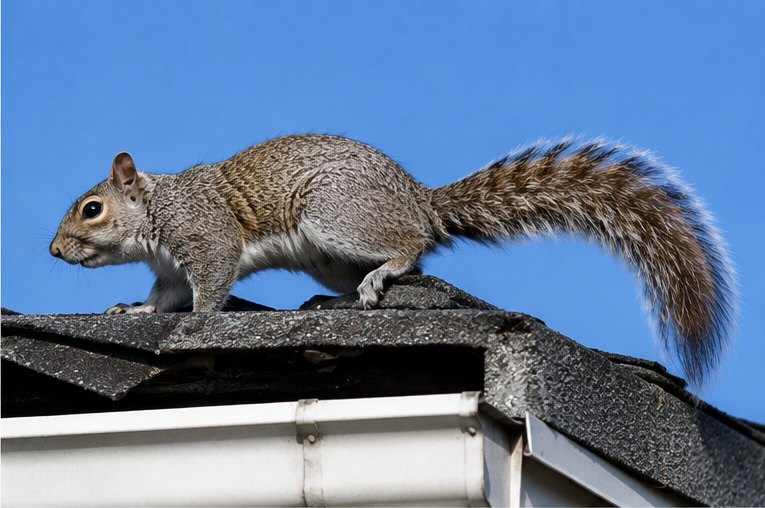
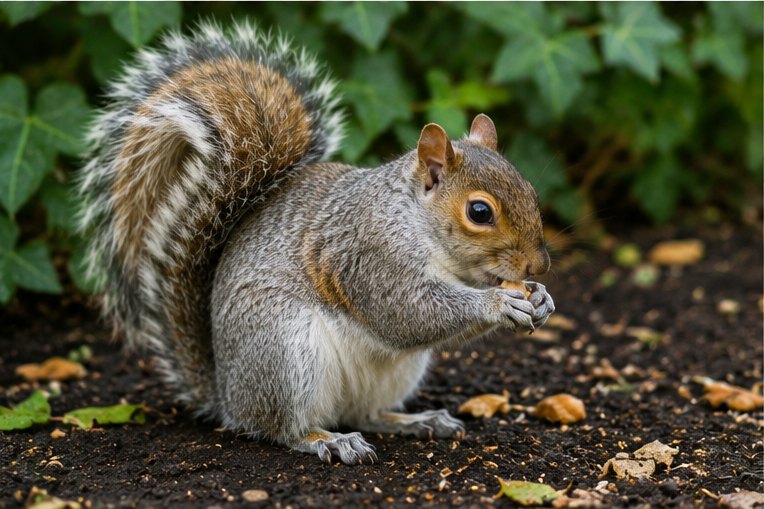
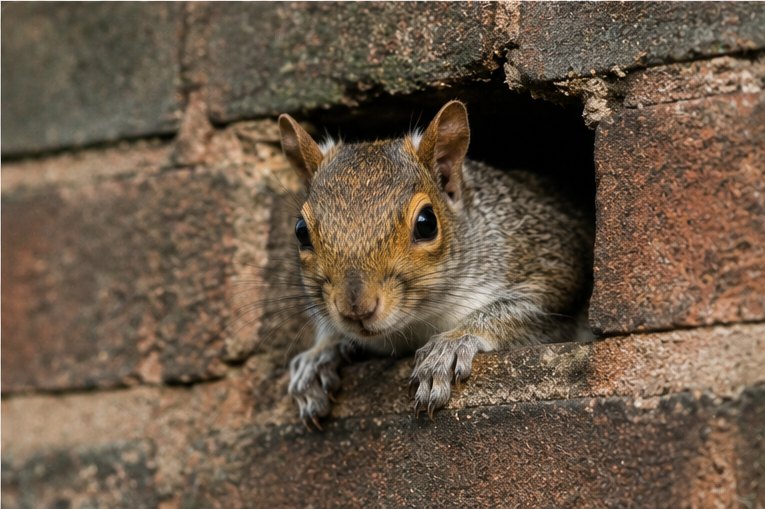
The same service, described for the three situations it is most often booked in.
Tell us what time of day you hear the activity, whether it is a loft or a wall cavity, and whether there are trees or cables reaching your roof.
Squirrels in a roof void are a structural and electrical risk as much as a pest one. The report will record the entry point, the insulation damage and any gnawed cabling found.
Roof voids, plant rooms and cable runs. Tell us the type of building and where the activity is being heard.
Squirrel Control has its own page for every area we cover, each with the same published price and the detail that actually applies to that area’s buildings.
Five guides for this service are being written for the Zero Pest advice centre.
One question settles this more reliably than anything else, and you can answer it tonight: what time of day do you hear it? Squirrels are…
Read the guide →This is the one service on the site where the law decides the method before anything else does. Understanding that first explains why the…
Read the guide →Squirrel control is £280 for the trapping service. That is one figure for a programme of visits rather than a price per call, and the…
Read the guide →A reference rather than a checklist. Every sign a grey squirrel leaves on a building, what it looks like, and how each one separates…
Read the guide →A loft cleared in February and occupied again by November is the classic pattern, and it is not a failed programme. It is an available…
Read the guide →No. The grey squirrel is a non-native invasive species and it is an offence to release one back into the wild or allow it to escape. Any company offering to relocate your squirrel is not describing something it can lawfully do.
Daytime activity in a loft points strongly at squirrels, because they are active in daylight and rats are not. It is not a certainty, and the survey confirms it, but it is the single most useful thing you can tell us on the phone.
Please do not. Sealing the roofline while animals are still inside traps them in the loft, where they will cause far more damage getting out, and can shut in dependent young. Proofing is done after the loft is confirmed clear.
Because trapping has to be done properly. Traps are sited where the animals are moving and checked on the required schedule, and the programme continues until activity has stopped. That is a series of visits, not a call-out.
Squirrels gnaw constantly. Cable insulation in a loft is a genuine fire risk, and insulation gets torn up for nesting. Roofline damage also lets water in long after the animals have gone.
It is priced as a trapping service - one published figure for the programme, shown on this page. Proofing the entry point afterwards is quoted separately.
Greenwich, Blackheath, Woolwich, Eltham, Charlton, Plumstead and Abbey Wood.
Call the office or send the enquiry form, and tell us when you hear the activity, where in the property it is, and whether trees or cables reach the roof.
Every service has its own page with its own published price.
Tell us what you have seen, where in the property you found it and whether it is a house, a flat or commercial premises. We will confirm the service and the price before anything is booked.
£280 trapping service. Call 020 3369 0124, send the enquiry form or message us on WhatsApp.