 Zero Pest
Flats £190 | Houses £240
How Do You Know If You Have Rats in Greenwich?
Most people call us at the point where they suspect rats but cannot prove it. This guide is about that gap: what genuinely counts as…
Read the guide →Pest Control Greenwich
Rats leave evidence before they are ever seen. Droppings along a wall, a smell in a cupboard, gnawed packaging, scratching from under the floor or above the ceiling. Treatment deals with the animals that are in the property now. Finding out how they got in decides whether you are reading this page again next winter.
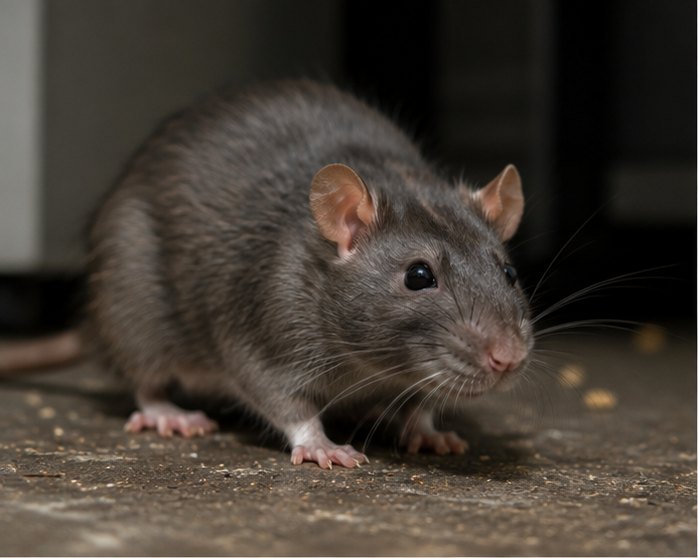
Rats are cautious, nocturnal and considerably better at avoiding people than people are at spotting them, so the signs usually arrive well before the animal does. Any one of these is worth a look:
This is the part that most rat problems come down to, and it is the reason Zero Pest Greenwich prices proofing separately instead of burying it in the treatment fee. A rat did not appear inside the property. It walked in, and it used something: a defective drain, a gap where a service pipe passes through a wall, an air brick that has lost its cover, a lifted roof tile with a route down the cavity, or a door that no longer meets its threshold.
Deal only with the animals and you have solved the problem for as long as it takes the next one to find the same opening. That is why the survey looks at where activity is concentrated and how the route runs, rather than simply putting product down where the droppings are and leaving.
Rats and drains. A surprising proportion of household rat problems in older London housing stock start underground rather than at ground level. If the evidence points at a defective drain or a redundant connection, we will tell you, because that is a drainage repair and no amount of pest treatment substitutes for it.
Zero Pest Greenwich publishes its standard treatment prices, so you can see the cost before you contact anybody.
| Rat Control in Greenwich | Published price |
|---|---|
| Flat or apartment | £190 |
| House | £240 |
Rat control is priced by property type because the work genuinely differs. A flat is a defined space with a limited number of routes into it. A house brings a roof void, a subfloor, a garden, outbuildings and its own drainage run, and all of them need looking at before anything is placed.
Pest proofing is a separate service and a separate price. That is deliberate. Bundling it in would mean charging every customer for work that some of them do not need and others need far more of than a single fee could ever cover.
The first visit establishes what is actually happening: which areas carry the activity, how long it has been going on, whether it is confined to one part of the building, and whether there are children, pets or non-target wildlife to work around. That assessment decides the method, not the other way round.
Control is then placed in the runs the rats are actually using rather than in the places that are convenient to reach, and in secured points where anything else could get at them. Rats are neophobic - they treat anything new in a familiar route with suspicion - which is precisely why a single visit with a supermarket product so often produces nothing, and why the programme is built around returning to check what has been taken.
Greenwich, Woolwich and Plumstead have a great deal of converted and terraced housing, which matters for rats specifically: a shared subfloor, a shared roof void or a run of connected drainage means the animal's territory does not stop at your front door. In a converted house the activity is frequently found in communal voids rather than in any one flat, and the sensible enquiry is the one that mentions the neighbours have noticed it too.
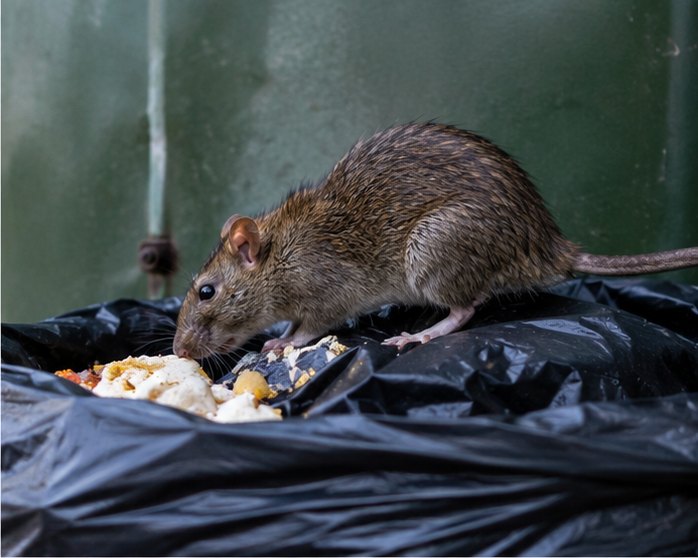
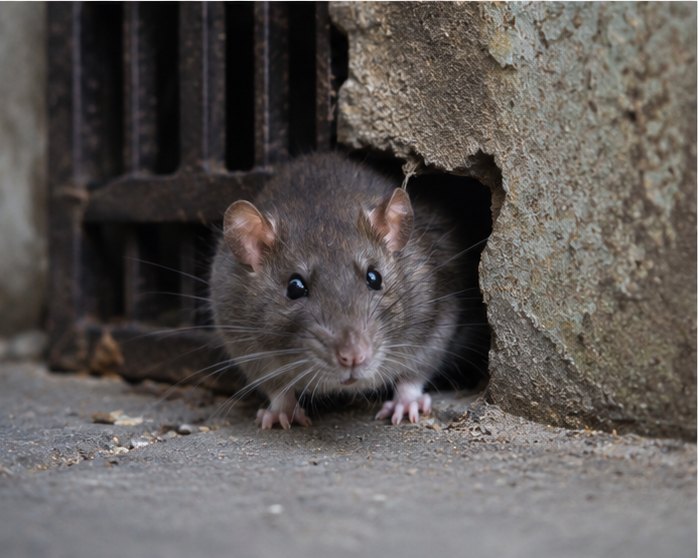
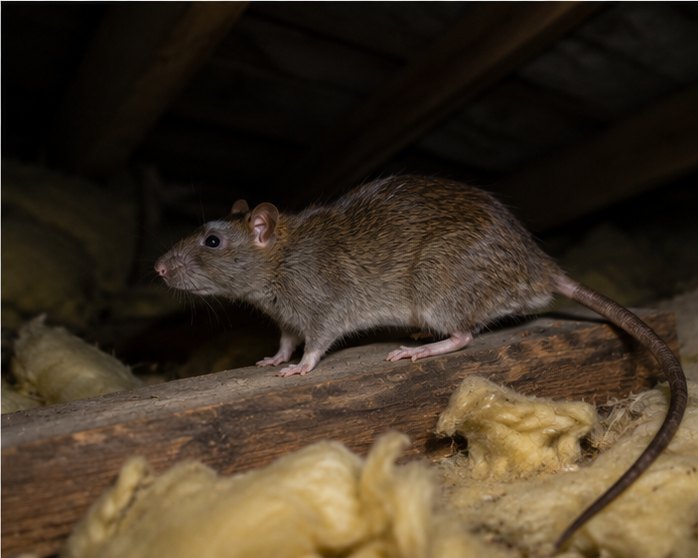
The same service, described for the three situations it is most often booked in.
Tell us which room the noise or the droppings are in, whether it is above you or below you, and whether anything has changed outside recently - building work, a new drain, a cleared garden.
Rat activity in a let property is a repairing matter as much as a pest one. We will report what was found, what was treated and what remains a building defect, which is usually what the tenant, the agent and the landlord each need in writing.
Food premises, storage areas and back-of-house voids get investigated rather than sprayed. Tell us the type of premises and where the evidence is showing up.
Rat Control has its own page for every area we cover, each with the same published price and the detail that actually applies to that area’s buildings.
Five guides for this service are being written for the Zero Pest advice centre.
Most people call us at the point where they suspect rats but cannot prove it. This guide is about that gap: what genuinely counts as…
Read the guide →What genuinely works, what wastes money, and how long it takes. This is the process from the inside, including the parts most companies do…
Read the guide →Rat control in Greenwich is £190 for a flat and £240 for a house. This guide explains what that difference actually pays for, what is…
Read the guide →A reference rather than a checklist. Each sign a rat leaves, what it actually looks like, what it tells you, and - just as usefully - what…
Read the guide →Treated, quiet for a fortnight, and then back. It is the most frustrating version of this problem and it almost always has one of five…
Read the guide →Sometimes, and it would be dishonest to promise it every time. Rats are wary of anything new in a route they use, so the programme is built around placing control correctly and coming back to check what has actually been taken. What we can say plainly is that if the entry point stays open, the property stays available.
Not always, but frequently. Treatment removes the rats that are there. Proofing closes the way in. If the survey shows a hole that can reasonably be closed, we will quote proofing separately so you can see exactly what you are paying for and decide.
Not necessarily. A rat crossing a garden is not the same as a rat living in your house. What matters is whether there is evidence of it staying - burrows, runs, droppings in a consistent place, or activity inside the building.
Control is placed in secured points and in locations that are not accessible to children or pets, and we need to know at the survey what animals are in the property and whether there is wildlife in the garden, because that changes what gets used and where it goes.
Greenwich, Blackheath, Woolwich, Eltham, Charlton, Plumstead and Abbey Wood.
Yes. We take enquiries from landlords, letting agents and property managers as well as from owner-occupiers and tenants, and the published price means the applicable figure is visible before the enquiry is made.
Yes. Contact us with the type of premises and a description of where the evidence is appearing.
Call the office, or send the enquiry form. Tell us what you have seen, which part of the property it is in, when the activity happens and whether it is a house or a flat.
Every service has its own page with its own published price.
Tell us what you have seen, where in the property you found it and whether it is a house, a flat or commercial premises. We will confirm the service and the price before anything is booked.
Flats £190 | Houses £240. Call 020 3369 0124, send the enquiry form or message us on WhatsApp.