 Zero Pest
Flats £190 | Houses £240
How Do You Know If You Have Rats in Greenwich?
Most people call us at the point where they suspect rats but cannot prove it. This guide is about that gap: what genuinely counts as evidence, what…
Read the guide →Rat Control advice
What genuinely works, what wastes money, and how long it takes. This is the process from the inside, including the parts most companies do not put on a website.
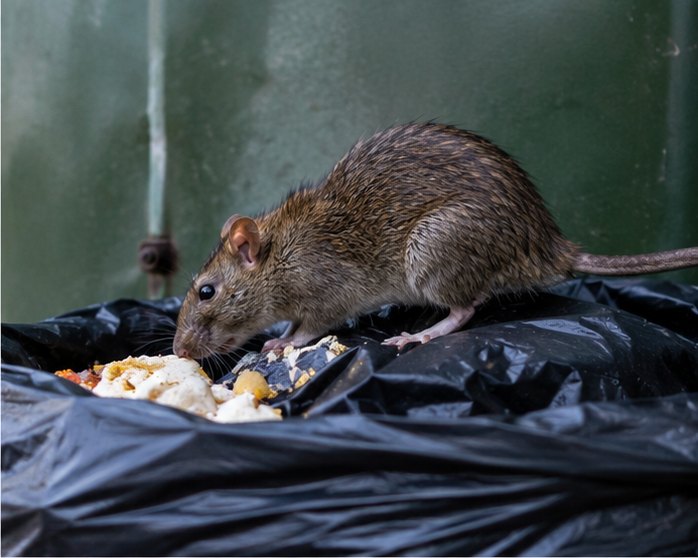
Every effective rat job runs in the same order, and the order matters more than the products.
Skip step two and you have a treatment. Do step five before step four and you have rodents sealed inside a wall. Skip step six and you are back next year.
It would be easy to put a number here and it would not be honest. What determines the timescale is how established the population is, whether the food source is still available, and whether the route is inside your control or somebody else's.
What we can say about the shape of it: rat work is a programme rather than a single call, because neophobia means the first placement is often ignored for a period. Progress is measured by what has been taken and by whether fresh signs are still appearing, not by whether the noise stopped on the first night. A quiet fortnight followed by a return is the classic pattern of a population that was reduced rather than cleared.
Tell us at the survey what animals are in the property and what wildlife uses the garden. It changes what is used and where it goes.
Control is placed in secured points and in locations not accessible to children or pets. Where there are non-target animals - a cat that hunts, a dog that gets into everything, foxes or birds in the garden - that is a factor in the method, and it is much better raised at the start than discovered halfway through.
Two things decide whether you see us again. The first is proofing - £180, up to 1 hour, quoted separately, done once the loft or the subfloor is confirmed clear. The second is the food source, which costs nothing and is entirely in your hands.
A property with the route closed and nothing worth eating in the garden is a property rats pass through rather than move into. That is the actual goal, and it is more achievable than "never seeing a rat again", which nobody can promise you in a city.
For completeness, since this guide is about the whole process rather than the treatment alone.
| Item | Position |
|---|---|
| Rat control treatment and follow-up | Flats £190 | Houses £240 – the published price |
| Pest proofing the entry point | £180, up to 1 hour – separate, and done after activity stops |
| Removing the food source | Free, and entirely in your hands |
| Drainage repair, if that is the route | A drainage contractor will quote it |
| Roofing or building repair | A roofer or builder will quote it |
| Electrical work where cable is damaged | An electrician will quote it |
We separate these deliberately rather than rolling them into one number. A single figure that quietly includes work we cannot actually do is how a customer ends up paying for a repair that never happened.
It depends on how established the population is and whether the food source and the entry point are still available. Rat work is a programme rather than a single visit, because rats are wary of anything new in a familiar route.
You can, and a single bait point placed somewhere convenient very often produces nothing - which people then read as there being no rats. Rats are neophobic, and placement in the runs they actually use is most of the skill.
No. Blocking the route while animals are inside traps them in the building, and the usual consequence is opening up plasterwork later to find what died in it. Proofing goes last.
It helps considerably. Spilled seed under a feeder is a reliable food supply at ground level. It does not clear a population by itself, but it stops the property being worth staying in.
Control is placed in secured points and in locations not accessible to pets or children. Tell us at the survey what animals are in the property and what wildlife uses the garden - it affects what is used and where it goes.
The rest of the rats advice centre, and the service page it all links back to: Rat Control Greenwich.
Most people call us at the point where they suspect rats but cannot prove it. This guide is about that gap: what genuinely counts as evidence, what…
Read the guide →Rat control in Greenwich is £190 for a flat and £240 for a house. This guide explains what that difference actually pays for, what is inside the…
Read the guide →A reference rather than a checklist. Each sign a rat leaves, what it actually looks like, what it tells you, and - just as usefully - what it rules…
Read the guide →Treated, quiet for a fortnight, and then back. It is the most frustrating version of this problem and it almost always has one of five explanations -…
Read the guide →Tell us what you have seen and where in the property you found it, and we will confirm the service and the price before anything is booked.
Flats £190 | Houses £240. Call 020 3369 0124, send the enquiry form or message us on WhatsApp.