 Zero Pest
Flats £190 | Houses £240
How to Get Rid of Rats in a Greenwich Property
What genuinely works, what wastes money, and how long it takes. This is the process from the inside, including the parts most companies do not put on…
Read the guide →Rat Control advice
Most people call us at the point where they suspect rats but cannot prove it. This guide is about that gap: what genuinely counts as evidence, what gets mistaken for it, and how to settle the question yourself before spending anything.
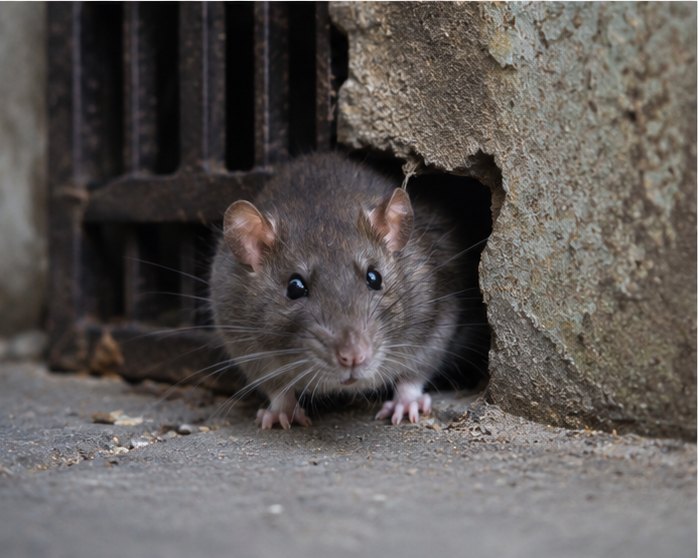
A noise in a ceiling or a wall is the commonest reason people start worrying, and it is also the least specific thing that can happen in a house. Before assuming rats, it is worth knowing what else produces the same impression.
| What you noticed | Also caused by |
|---|---|
| Scratching above a ceiling | Birds in the eaves, squirrels, mice, or a loose cable moving in wind |
| Movement under the floor | Mice, contracting timber as heating goes off, water pipes |
| A smell you cannot place | A dead animal of any kind, a drain fault, damp |
| Something running across the room at night | Mice far more often than rats |
| Gnawed food packaging | Mice, which do this far more often than rats indoors |
None of that means you do not have rats. It means a single ambiguous observation is not enough to act on, and the next step is to get a second, less ambiguous one.
In rough order of how much weight to put on it:
All free, and between them they will usually settle it.
A thin dusting of plain flour across the suspected route - along the skirting, in front of the gap, across the floor of the cupboard - and leave it overnight. Tracks in the morning tell you something is using that route and roughly how big it is. It is the oldest trick in the trade and it still works.
Not to hear more, but to hear when. Rats are nocturnal and their activity is concentrated after dark. Something busy at three in the afternoon in a loft is far more likely to be a squirrel, and something audible all day from the eaves in spring is likely to be birds.
A matchstick or a pen beside the droppings, in decent light. It is worth doing because rodent droppings are the single most useful thing you can send with an enquiry, and because the difference between rat and mouse droppings is obvious in a photograph and almost impossible to describe over the phone.
Do not handle droppings. Photograph them, and leave them where they are until the survey - where they have collected is information about where the route runs. If you must clear an area, do it after you have taken the picture.
Both services cost the same here - £190 for a flat and £240 for a house - so the answer will not change your bill. It changes what gets done.
Rats are cautious about anything new in a familiar route, so the programme is built around returning to check what has been taken. Mice are curious rather than suspicious, sample in small amounts at many points, and keep several nesting sites going at once, so control has to be distributed rather than concentrated.
The quick discriminators: droppings gathered in a run rather than scattered across cupboards, a greasy smear along a wall, gnawing on non-food materials, burrows outside, and noise with real weight to it, all point at rats.
There is a point where further self-diagnosis stops being useful, and it is worth naming so you are not still setting out flour in three weeks' time:
Equally, one rat crossing a garden once is not the same as a rat living in your house, and we will tell you that on the phone rather than book a visit for it.
Four things, and between them they usually mean the first visit starts in the right place rather than spending twenty minutes finding it:
If you have already tried something, say so. It is not a confession - where bait or traps were placed, and what happened to them, is real information about how the population is moving.
Not on its own - a noise is the least specific thing a house can produce. Put down a dusting of flour on the suspected route overnight and note what time of day the activity happens. Two independent signs are worth acting on; one ambiguous one is worth investigating first.
Size mostly, and distribution. Rat droppings are substantially larger and collect along a route; mouse droppings are much smaller and scatter through cupboards and drawers. A photograph with a matchstick beside them settles it in seconds.
Photograph them first and leave them if you can - where they have gathered tells us where the route runs. Do not handle them directly.
Probably not. A rat crossing a garden is not the same as a rat living in the building. What matters is evidence of it staying - burrows, a worn run, droppings in a consistent place, or activity indoors.
It makes them less likely. Rats are nocturnal. Heavy daytime movement in a loft points at squirrels, which is a different service and a different job.
The rest of the rats advice centre, and the service page it all links back to: Rat Control Greenwich.
What genuinely works, what wastes money, and how long it takes. This is the process from the inside, including the parts most companies do not put on…
Read the guide →Rat control in Greenwich is £190 for a flat and £240 for a house. This guide explains what that difference actually pays for, what is inside the…
Read the guide →A reference rather than a checklist. Each sign a rat leaves, what it actually looks like, what it tells you, and - just as usefully - what it rules…
Read the guide →Treated, quiet for a fortnight, and then back. It is the most frustrating version of this problem and it almost always has one of five explanations -…
Read the guide →Tell us what you have seen and where in the property you found it, and we will confirm the service and the price before anything is booked.
Flats £190 | Houses £240. Call 020 3369 0124, send the enquiry form or message us on WhatsApp.