 Zero Pest
Flats £190 | Houses £220
How Do You Know If You Have Ants in Greenwich?
Nobody needs help identifying an ant. The questions worth answering are different: is there a nest, where is it, is it yours, and does this actually…
Read the guide →Ant Control advice
Ants return for four reasons, and one of them is unusual: it is caused by whatever was done last time. Working out which applies is what stops you paying for the same thing twice.
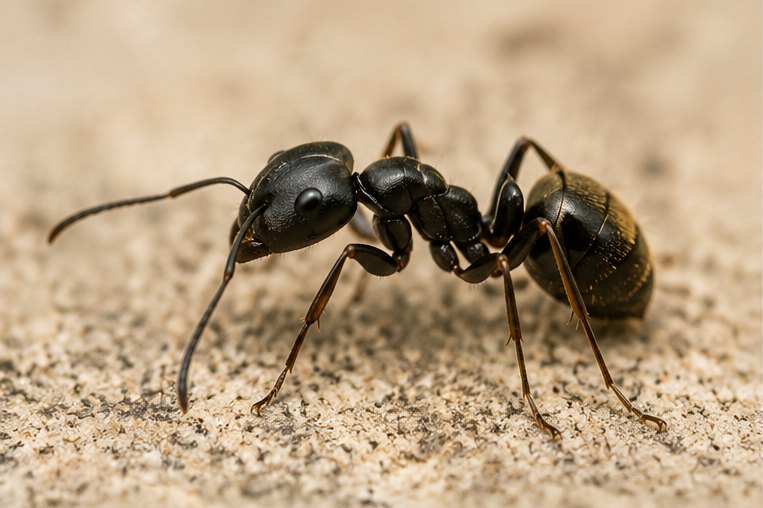
The commonest reason by a distance, and the reason spraying features so heavily in this article.
Anything that kills workers on the trail - a household spray, a wipe with something strong, a home remedy - deals with the part of the colony that is visible. The queen and the brood are elsewhere and unaffected. Workers are replaced continuously, so the trail comes back as soon as the treated surface stops being lethal.
The tell is the timing. A trail that returns within days of being cleared, in the same place, is a colony that was never touched.
This is the one worth understanding properly, because it is the only pest problem on this site that a failed DIY attempt can actively multiply.
Heavy chemical disturbance around a nest can cause a colony to fragment. Part of it relocates, sometimes several times over, and what was one nest with one trail becomes two or three nests with two or three trails, in places that have no relationship to the original.
The tells:
It is not irreversible. It does mean the job is now larger than the original one, and it is the strongest practical argument against reaching for a spray while waiting for a visit.
Common in terraced streets and in gardens that back onto each other.
A mature colony established under a neighbour's patio, in a shared path or in communal ground will keep sending foragers regardless of what happens on your side. Baiting your trail reaches that colony through the workers, which genuinely helps - but a large established nest across a boundary is a recurring source, and treating around it produces a season of quiet rather than a resolution.
We will tell you when that is what the evidence suggests, before you book. A temporary result sold as a permanent one is how a customer ends up paying twice and trusting nobody.
The reason people most often mistake for failure, and it is not one.
New queens establish new nests. A property with warm paving over well-drained ground, a sunny wall base and a doorstep with a gap under it is attractive ground, and it stays attractive after the previous colony has gone. A trail the following summer, in a different place, is very often a different colony that has found the same conditions.
The distinguishing question is timing and location. Same place, within days or weeks - the old colony. New place, the following season - a new one.
What to tell us if it has come back. How long the quiet period lasted, whether the trail is in the same place or a new one, whether anything was sprayed in between, and whether you ever found the nest. Those four answers separate the causes above almost every time.
Ants come indoors for food and water. What keeps a trail running once it exists is frequently something small and easily changed:
None of these creates an ant problem. All of them make a property worth returning to, and dealing with them is free.
Worth separating out, because it behaves differently. Pharaoh ants nest inside heated buildings rather than in the garden, and colony splitting in response to disturbance is characteristic of the species rather than an occasional outcome.
So a recurring indoor ant problem in a heated block, with very small pale ants, active all year rather than seasonally, is worth identifying properly before anything else is applied. Say so at the enquiry and send a photograph.
A kitchen without a trail, for the rest of the season and usually beyond. That is achievable and it is what the work is aimed at.
What nobody can promise is a garden without ants, or that no new queen will ever choose the ground under your patio again. Where the source is over a boundary or in communal ground, we will say so and describe what a realistic outcome is, rather than booking an annual treatment and calling it maintenance.
Ant activity is seasonal in a way most pests on this site are not, and knowing the shape of the year explains a good deal of what looks like recurrence.
| Roughly when | What is happening |
|---|---|
| Early spring | Colonies becoming active again; first trails appear |
| Late spring to early summer | Peak foraging. Most indoor trails start here. |
| Mid to late summer | Flying ants over a few warm days; new queens dispersing |
| Late summer to autumn | Activity declining; trails often stop without treatment |
| Winter | Colonies inactive. Indoor ants now are unusual - and worth identifying, as pharaoh ants are active all year. |
Two practical consequences. A trail that stops in September has not necessarily been resolved - it may simply be the season ending, and it will be back. And ants indoors in January in a heated block are worth a photograph, because that is not how a garden ant behaves.
Almost always because the colony itself was never reached. Killing workers on the trail leaves the queen and brood untouched, and workers are replaced continuously.
Yes, and this is the one pest where a failed DIY attempt can genuinely multiply the problem. Heavy disturbance can split a colony into several nests in new places - the tell is trails appearing at entry points that were never active before.
Often not. New queens establish new nests, and ground that suited one colony suits the next. Same place within weeks points at the old colony; a new place the following season usually means a new one.
Baiting your trail reaches the colony through the workers, which genuinely helps. But a large established nest across a boundary is a recurring source, and we will tell you that a result on your side may be seasonal rather than permanent.
Deal with what keeps a trail worth running - a spillage in the kickboard void, pet food left down, an unsealed bin, a slow drip under the sink. None of it clears a colony; all of it makes the property less worth returning to.
The rest of the ants advice centre, and the service page it all links back to: Ant Control Greenwich.
Nobody needs help identifying an ant. The questions worth answering are different: is there a nest, where is it, is it yours, and does this actually…
Read the guide →Almost everyone tries the same thing first, and it is the one approach that can leave you worse off than before. Here is what is actually happening,…
Read the guide →Ant treatment is £190 for a flat and £220 for a house. That house figure is the odd one out on this site, and the reason it is lower says something…
Read the guide →A reference rather than a checklist. Every sign an ant colony gives away, the two species that behave differently, and the three insects people bring…
Read the guide →Tell us what you have seen and where in the property you found it, and we will confirm the service and the price before anything is booked.
Flats £190 | Houses £220. Call 020 3369 0124, send the enquiry form or message us on WhatsApp.