 Zero Pest
From £180
How to Get Rid of Carpet Moths in a Greenwich Property
Carpet moth treatment is almost entirely about the parts of a room nobody walks on. Everything else - the moths, the middle of the floor, the new…
Read the guide →Carpet Moth Control advice
Most people who call us about carpet moths have seen a moth. That is the least useful piece of evidence available. The damage is what settles it, and it is always somewhere nobody walks.
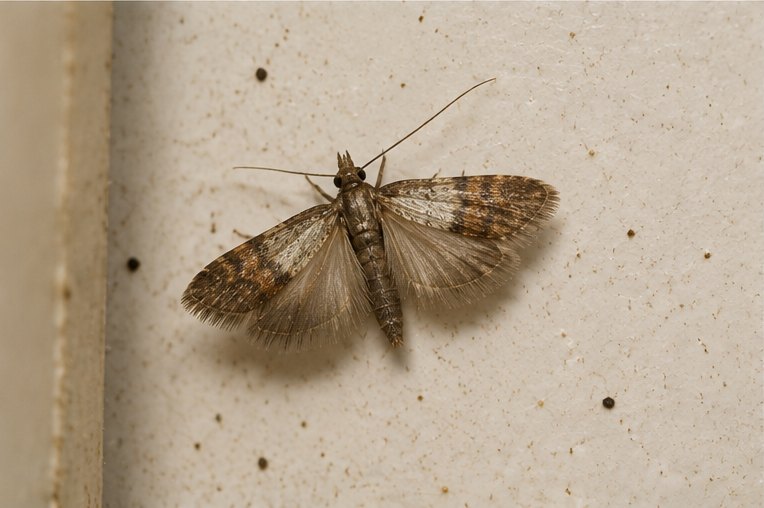
Adult carpet moths do not eat carpet. The larvae do, and the adults exist to produce more of them. So seeing a moth tells you larvae are somewhere nearby and tells you nothing at all about where.
It also means the reverse holds. Plenty of established carpet moth problems are found with no adults ever having been noticed, because the larvae work out of sight for months before anything emerges.
So do not judge it by moths. If you have seen one, go and look at the floor properly. If you have never seen one and the carpet is going bare at the edges, that is still very likely to be this.
Carpet moth larvae avoid light and disturbance, and that single behaviour produces a damage pattern so consistent it is close to a signature.
The corollary is what makes this diagnostic: a busy hallway or a living room floor that gets walked on daily can look perfect while the room next door is being eaten along its edges. Damage in the middle of a well-used floor is usually something else.
Carpet moth larvae feed on keratin, the protein in animal fibre. That means wool, silk, felt, sheepskin, feather-filled items and wool underlay. It does not mean nylon, polypropylene or polyester.
So if a wool rug is going bare while the man-made carpet beside it is untouched, that is a confirmation you can make yourself in ten seconds.
The trap: a wool underlay beneath a synthetic carpet can be attacked while the carpet above it looks perfect. If the carpet is synthetic and something is still going wrong, lift a corner.
| What you have found | What it may actually be |
|---|---|
| Small, clean, sharply defined holes | Carpet beetle - punches through rather than grazing |
| Damage inside a wardrobe on stored knitwear | Clothes moth, a close relative. Many properties have both. |
| Moths in a food cupboard, not near the floor | Pantry moths in dry goods - a different problem entirely |
| Bare patch in a high-traffic area only | Wear, or a pet. Larvae avoid disturbance. |
| Damage to a synthetic carpet with no wool anywhere | Not carpet moth. They cannot digest man-made fibre. |
A great deal of the older housing across Greenwich, Blackheath and Plumstead has original boards under the carpet. Gaps between boards give larvae shelter no vacuum will ever reach, so a room can look immaculate and still be supporting a population underneath.
If the carpet looks fine but you keep seeing small moths low down, lifting a corner near the skirting is worth doing before you conclude there is nothing there.
Two situations where a carpet moth problem arrives fully formed and catches people out.
Damage found within weeks of moving in is almost always pre-existing - the previous occupants' furniture was covering it, and it becomes visible the moment the room is emptied. That is actually good news: it means the extent is knowable now, before your own furniture goes back on top of it.
Check the edges of every room before you unpack, particularly under where the previous furniture stood. Ten minutes then is worth a great deal later.
Wool rugs are one of the commonest ways carpet moth is introduced to a property that did not have it. Before a rug comes into the house, turn it over, look at the underside and the fringe, and check for silken tubes in the pile and fine debris in the backing.
If it has been rolled and stored for a long period, that is exactly the undisturbed condition larvae need.
Possibly, and possibly not - adults do not eat carpet, so seeing one tells you very little. Go and check the edges of the room, under the sofa and beneath any rug. That is where the damage will be if it is there.
Very likely. Larvae work out of sight for months, and plenty of established problems are found without an adult ever having been noticed.
The damage. Carpet moth grazes an area down into a thinning or bare patch and leaves silken tubes in the pile. Carpet beetle punches small, clean, sharply defined holes.
The carpet itself, no - they cannot digest man-made fibre. But a wool underlay beneath it can be attacked while the carpet above looks perfect, and wool rugs and stored wool items are also food.
Because larvae avoid light and disturbance. Undisturbed areas are exactly where they can feed uninterrupted, which is why a busy room can look perfect while the one next door is being eaten at the edges.
The rest of the carpet moths advice centre, and the service page it all links back to: Carpet Moth Control Greenwich.
Carpet moth treatment is almost entirely about the parts of a room nobody walks on. Everything else - the moths, the middle of the floor, the new…
Read the guide →Carpet moth treatment is £180 for the first room and £60 for each additional one. The question that actually decides your bill is which rooms count -…
Read the guide →A reference rather than a checklist. Every sign a carpet moth leaves, what it looks like, and how to separate it from the three other things that get…
Read the guide →Carpet moth recurrence has a short list of causes and almost all of them are the same thing in different clothes: somewhere undisturbed that was not…
Read the guide →Tell us what you have seen and where in the property you found it, and we will confirm the service and the price before anything is booked.
£180 for the first room and £60 for each additional room. Call 020 3369 0124, send the enquiry form or message us on WhatsApp.