 Zero Pest
From £180
How Do You Know If You Have Carpet Moths in Greenwich?
Most people who call us about carpet moths have seen a moth. That is the least useful piece of evidence available. The damage is what settles it, and…
Read the guide →Carpet Moth Control advice
Carpet moth recurrence has a short list of causes and almost all of them are the same thing in different clothes: somewhere undisturbed that was not treated, because nobody knew it was part of the problem.
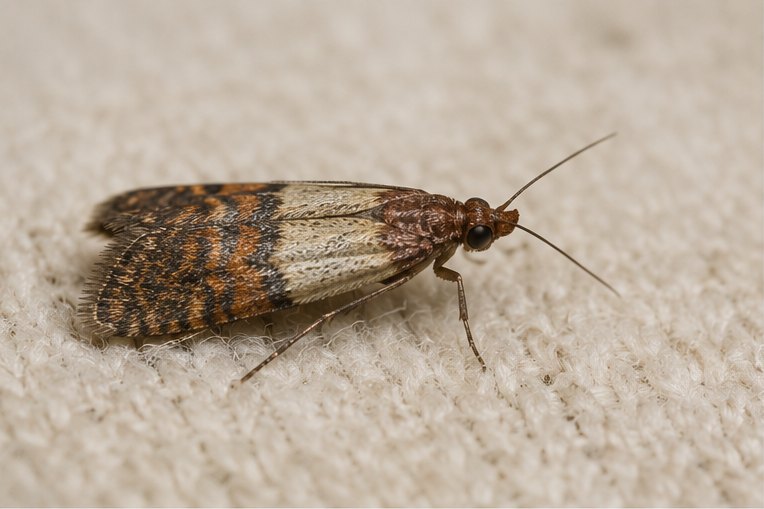
The commonest cause, and it follows directly from how the larvae behave.
Carpet moth concentrates where nothing happens. The rooms people nominate for treatment are the rooms they are in - the living room where they saw a moth, the hallway where the runner is going bare. The room that is genuinely worst is frequently the spare bedroom, the box room or the room that became storage, precisely because nobody goes in there.
Treat the busy rooms and leave the quiet one and the population survives in the quiet one, then spreads back.
Which is why the room count question is worth answering honestly. Not where you have seen moths - where the carpet is wool and nothing has been moved in a year. Those are different lists, and the second one is the useful one.
A reservoir sitting quietly in the property, feeding a population that keeps reseeding the treated floor.
If a treated room keeps producing damage, the question is not what was used on the carpet. It is what wool is in the property that nobody has looked at.
Larvae continue hatching for a period after treatment. Cleaning the treated perimeter inside the window we specify removes the treatment before it has dealt with them.
It happens most often in households that clean thoroughly and regularly, which is a slightly unfair irony. The instruction is temporary and it matters: leave the treated edges alone for the stated period, then vacuum them regularly forever.
The subtler version, and the reason this pest recurs in some properties and never in others.
A treated room that goes straight back to being undisturbed - furniture returned to exactly the same footprint, rug laid back in exactly the same place, room closed up again - is once more ideal conditions. Treatment deals with the population; the conditions decide whether a new one establishes.
Moving furniture occasionally, lifting rugs a couple of times a year and vacuuming the edges is genuinely what separates the properties that get this once from the ones that get it repeatedly. It is the closest thing to prevention available for any pest on this site.
Or both, which is common.
If floor treatment holds but knitwear keeps getting holes, the problem in the wardrobe was never part of the job. They are close relatives with the same appetite, and a property can carry both independently.
The fix is to include the storage, not to treat the floor again.
What to tell us if it has come back. Which rooms were treated and which were not, whether the edges were cleaned during the specified period, whether there is any wool in storage anywhere - loft, under beds, wardrobes - and whether the damage is on the floor or on clothing. Those four answers identify the cause almost every time.
A treated property with the wool reservoirs dealt with, the edges vacuumed regularly and the furniture moved occasionally will normally stay clear. This is one of the few pests where the household genuinely controls whether it recurs.
Where a property has valuable wool carpet, antique rugs or a large stored textile collection, an occasional check of the quiet corners is worth more than any treatment - because the damage is done long before anything is visible from standing height.
Carpet moth is the pest on this site most affected by ordinary household habit. This takes about an hour, twice a year, and it is more effective than any treatment at preventing recurrence.
Households that do this get carpet moth once. Households that do not, in a property with wool carpet, tend to get it repeatedly.
Usually a reservoir elsewhere - wool underlay under a synthetic carpet, a rug in the loft, blankets in storage, or an untreated room nobody goes into. The treated floor is being reseeded from somewhere that was never part of the job.
During the period we specify, yes - cleaning removes the treatment before the remaining larvae have hatched into it. Afterwards, regular vacuuming of the edges is the best ongoing protection there is.
Probably clothes moth alongside, which lives in stored clothing rather than on the floor. The wardrobes need including - treating the carpet again will not help.
No. Carpet moth needs wool and stillness, not mess. Immaculate homes with good wool carpet and furniture that never moves are close to ideal conditions.
Moving furniture occasionally, lifting rugs a couple of times a year, and vacuuming the edges and under furniture regularly. This is one of the few pests where a change of habit genuinely prevents recurrence.
The rest of the carpet moths advice centre, and the service page it all links back to: Carpet Moth Control Greenwich.
Most people who call us about carpet moths have seen a moth. That is the least useful piece of evidence available. The damage is what settles it, and…
Read the guide →Carpet moth treatment is almost entirely about the parts of a room nobody walks on. Everything else - the moths, the middle of the floor, the new…
Read the guide →Carpet moth treatment is £180 for the first room and £60 for each additional one. The question that actually decides your bill is which rooms count -…
Read the guide →A reference rather than a checklist. Every sign a carpet moth leaves, what it looks like, and how to separate it from the three other things that get…
Read the guide →Tell us what you have seen and where in the property you found it, and we will confirm the service and the price before anything is booked.
£180 for the first room and £60 for each additional room. Call 020 3369 0124, send the enquiry form or message us on WhatsApp.