 Zero Pest
From £180
How Do You Know If You Have Fleas in Greenwich?
Fleas are one of the few pests you can confirm yourself, for nothing, in about ten minutes. Two tests do it - and they also rule the problem out,…
Read the guide →Flea Control advice
Fleas are the treatment where the instructions afterwards matter as much as the visit itself - and where the correct instructions are the opposite of what almost everybody expects.
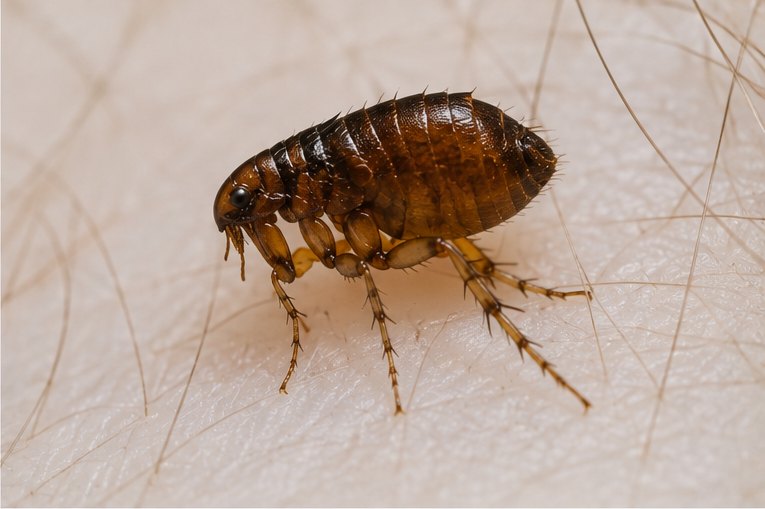
The vet treats the animal. We treat the property. Both are needed and doing one without the other wastes the money spent on it.
If the pet is still carrying adults, the property gets re-seeded within days of our visit. If the property is untreated, the animal gets reinfested from the carpet as fast as the vet's treatment clears it. People often do one, see it fail, and conclude that the thing they paid for did not work - when the problem was that only half the job was done.
Do both in the same week if you can. Veterinary treatment for the animal, hot wash of its bedding, and the property treatment. That sequence closes both halves at once and is what makes the difference between a result and a repeat.
Treatment is applied to the floor areas, the perimeter of each affected room, beneath the furniture where larvae shelter, and the areas the pet uses most.
The emphasis on edges and under-furniture is deliberate and it is the part people find surprising. The middle of an open floor is where a vacuum cleaner goes regularly and where light reaches; the larvae are at the margins, in the pile, and in the gaps between boards. Treating the visible carpet and not the perimeter is treating the part of the room the fleas are least interested in.
These three instructions do more for the outcome than anything else in this article, and every one of them feels wrong.
Flea pupae sit protected inside a cocoon and are far less affected by treatment than any other stage. What brings them out is warmth, carbon dioxide and vibration - the footfall of something passing. Hatching is what puts them into contact with the treatment.
A room that is shut up and avoided is a room where pupae sit and wait. Normal foot traffic is doing the work.
No mopping, no wet cleaning, no vacuuming. Cleaning removes the treatment before it has dealt with the pupae that are still to hatch. Two weeks of leaving it alone is the single most common instruction people break, and breaking it is the single most common reason a treatment underperforms.
That is pupae hatching into a treated floor, which is the process working rather than failing. What matters is whether the numbers are falling.
This catches out landlords and agents constantly and it is entirely avoidable.
A property is treated between tenancies and then stands empty for weeks. Nothing walks on the floors, so nothing triggers the remaining pupae. They wait. The new tenant moves in, walks about, and is bitten within days - and you have a complaint, a second treatment and a tenant who does not trust the property.
The fix costs nothing: make sure the floors are walked on during the fortnight after treatment. A viewing, an inventory clerk, a contractor, anybody. And do not have the property cleaned during that fortnight, because a pre-tenancy clean two days after a flea treatment removes the treatment.
If the animal travels in the car or sleeps in a garage, shed or utility room, those are part of the property as far as fleas are concerned. A treated house and an untreated dog bed in the garage is a common reason a problem reappears a month later.
Tell us at the survey where the animal actually goes, rather than where it is supposed to go.
The treatment is a single visit in most cases. What takes time is the pupal hatch working through, which is why the two-week aftercare window exists and why some continued activity during it is normal.
If numbers are not falling after that period, contact us. That is a different conversation - usually an untreated animal, an untreated area such as the car or the shed, or floors that were cleaned too soon.
Two additional things matter when there is more than one animal, and both are easy to miss.
Every animal needs treating, at the same time. One treated dog and one untreated cat is an untreated household as far as the carpet is concerned - the untreated animal re-seeds the floor continuously and the property treatment cannot outrun it.
The room count is usually larger. More animals means more places they sleep, and the honest count is where they actually go rather than where they are supposed to. A cat that sleeps on a bed upstairs and a dog that sleeps in the kitchen are two separate areas to treat, plus the routes between them.
Tell us at the survey how many animals there are, what each of them is, and where each one sleeps. It sounds like a lot of detail for a flea treatment and it is what determines whether the job holds.
Because vacuuming and wet cleaning remove the treatment before it has dealt with the pupae still to hatch. Vacuum thoroughly beforehand, then leave the floors alone for two weeks.
Flea pupae are triggered to emerge by warmth and vibration. Footfall brings them out of the cocoon and into contact with the treatment. A room that is shut up and avoided keeps them dormant.
Not well. They deposit on open horizontal surfaces and do not reach under furniture, into the carpet perimeter or between floorboards - which is exactly where the larvae are.
Yes, and in the same week if you can. If the animal is still carrying adults it re-seeds the property within days. Neither treatment substitutes for the other.
If the animal uses them, they are part of the problem. A treated house and an untreated dog bed in the garage is a common reason fleas reappear a month later.
Make sure the floors get walked on during the fortnight afterwards - an empty property does not trigger the pupae, so they wait for the new tenant. And do not have a pre-tenancy clean done during that window.
The rest of the fleas advice centre, and the service page it all links back to: Flea Control Greenwich.
Fleas are one of the few pests you can confirm yourself, for nothing, in about ten minutes. Two tests do it - and they also rule the problem out,…
Read the guide →Flea treatment is £180 for the first room and £60 for each additional one - the cheapest additional-room rate we publish. This guide explains why,…
Read the guide →A reference rather than a checklist. All four life stages, every mark they leave, and where each one actually lives - because three of the four are…
Read the guide →Fleas after a treatment are usually not a failure - they are a stage of the process that nobody explained. Here is how to tell that apart from the…
Read the guide →Tell us what you have seen and where in the property you found it, and we will confirm the service and the price before anything is booked.
£180 for the first room and £60 for each additional room. Call 020 3369 0124, send the enquiry form or message us on WhatsApp.