 Zero Pest
From £180
How to Get Rid of Spiders in a Greenwich Property
Most of what actually reduces spiders in a building costs nothing and has nothing to do with insecticide. Here is the order to do it in, and where…
Read the guide →Spider Control advice
You do not need help knowing you have spiders. Every building in Britain has them. The question worth answering is whether you have a problem - and most of the people asking it do not.
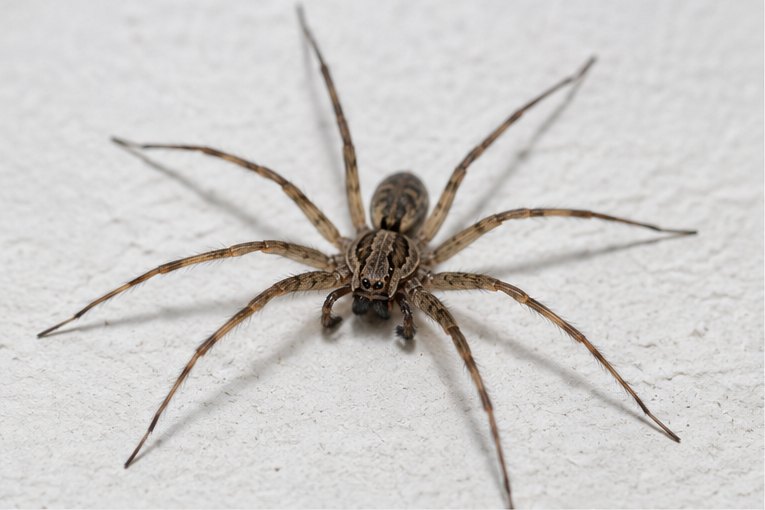
Almost nobody calls a pest controller uncertain about whether the thing in the bath is a spider. They call because they want to know whether it is normal, and whether anything should be done.
So this guide answers that instead. It is the only service page on this site where the honest advice, most of the time, is not to buy the service.
Every September the phone starts, and the explanation is nearly always the same. Mature male house spiders leave their webs in late summer and early autumn to look for females. That is why large spiders suddenly start crossing floors, appearing on walls and getting stuck in baths.
They are not moving in. They are moving through, they have been living in the building or the garden all year, and it lasts a matter of weeks.
British house spiders are not dangerous to people or pets, they do no damage to the building, and they eat a considerable number of the insects that would otherwise be in the room with you. There is nothing to treat.
Why they end up in the bath. Not because they came up the plughole - most cannot. They fall in while wandering across the room at night and cannot climb the smooth sides. A towel draped over the edge lets them out, if you would rather not pick it up.
There is a real version, and it has a shape. Not the number of spiders - the webbing, and how fast it returns.
| What you have | Whether it is a problem |
|---|---|
| A large spider indoors in September | No. Seasonal, and it ends. |
| A few webs in corners, cleared occasionally | No. Ordinary in any building. |
| Webbing that returns within days of being cleared, throughout | Yes - a genuine population issue. |
| Heavy webbing across a commercial stock area or shopfront | Yes - an operational problem. |
| Dense webbing in a cellar, garage or outbuilding | Possibly - these support far more than a living room. |
| A phobia that stops somebody using a room in their own home | Yes. This is a legitimate reason and we treat it as one. |
Clear the webbing thoroughly from the affected areas. Note the date. Look again in a week.
If it is largely still clear, you have an ordinary building with ordinary spiders and clearing webs occasionally is the whole answer. If it is substantially back within days, across multiple areas, that is a population being sustained by something - usually an insect supply - and treatment becomes a reasonable conversation.
That test costs nothing and it settles more enquiries than any amount of description over the phone.
Worth understanding because it explains everything about where spiders concentrate.
Spiders are where the food is, and the food is flying insects. Flying insects are where the light is. So the parts of a building that accumulate webbing are the parts near bright external lighting, near doors that stand open at night, and near anything that attracts insects.
Which means the most effective intervention available to most people has nothing to do with spiders at all: change what is lit outside, at night, near doors and windows. Reduce the insects and the spiders follow.
Worth being straightforward rather than either dismissing it or selling it.
The noble false widow is established across southern England and does turn up in London property. It is the British spider most likely to give a bite worth mentioning, and bites do happen - usually when one is trapped against skin in clothing or bedding.
It is also nothing like the animal the headlines describe. Bites are uncommon, and most reported ones amount to a local reaction comparable to a wasp sting. And it is very frequently misidentified - a great many photographs sent to us as false widows turn out to be ordinary house spiders or cellar spiders.
If you think you have found one, send a clear photograph before booking anything. It costs nothing and it is the cheapest step in this whole process.
Describe it honestly and we will tell you honestly. If it is the autumn season or a single sighting, we would rather say so than take the booking.
This is the situation where we take a spider enquiry entirely seriously, and it is worth saying so plainly because people often apologise for it.
Arachnophobia is common, it is genuinely distressing, and where it stops somebody using a room in their own home the cost of treatment is not the relevant comparison. It is not a trivial reason and we do not treat it as one.
Two things worth knowing:
What we will not do is pretend a treatment makes a building permanently spider-free, because it does not, and somebody making a decision on that basis deserves the truth rather than the sale.
No. Large house spiders appear indoors in late summer and autumn because mature males are moving about looking for a mate. It is seasonal, it is harmless, and it ends on its own within weeks.
Clear the webbing thoroughly and look again in a week. Largely still clear means an ordinary building. Substantially back within days, across several areas, is a population worth treating.
Almost certainly not - most cannot climb smooth vertical surfaces. It fell in while crossing the room at night and could not get out. A towel over the edge of the bath gives it a way out.
No. They are not dangerous to people or pets and they do no damage to the building. They also eat a great many of the insects that would otherwise be indoors.
The noble false widow is established in southern England and does appear in London property. It is the British spider most likely to give a bite worth mentioning, though bites are uncommon and usually amount to a local reaction. It is also very often misidentified, so send a photograph.
The rest of the spiders advice centre, and the service page it all links back to: Spider Control Greenwich.
Most of what actually reduces spiders in a building costs nothing and has nothing to do with insecticide. Here is the order to do it in, and where…
Read the guide →Spider control is £180 for the first area and £60 for each additional one. This is the price guide that tells most of the people reading it not to…
Read the guide →A reference for telling apart the spiders you actually find indoors - and, more usefully, for reading the webs, because the web tells you which…
Read the guide →Spiders return because they live outside and a building is not sealed. That is not a treatment failure, it is the situation - and understanding it is…
Read the guide →Tell us what you have seen and where in the property you found it, and we will confirm the service and the price before anything is booked.
£180 for the first room and £60 for each additional room. Call 020 3369 0124, send the enquiry form or message us on WhatsApp.