 Zero Pest
From £180
How Do You Know If You Have Spiders in Greenwich?
You do not need help knowing you have spiders. Every building in Britain has them. The question worth answering is whether you have a problem - and…
Read the guide →Spider Control advice
Spiders return because they live outside and a building is not sealed. That is not a treatment failure, it is the situation - and understanding it is the difference between managing this sensibly and paying for it repeatedly.
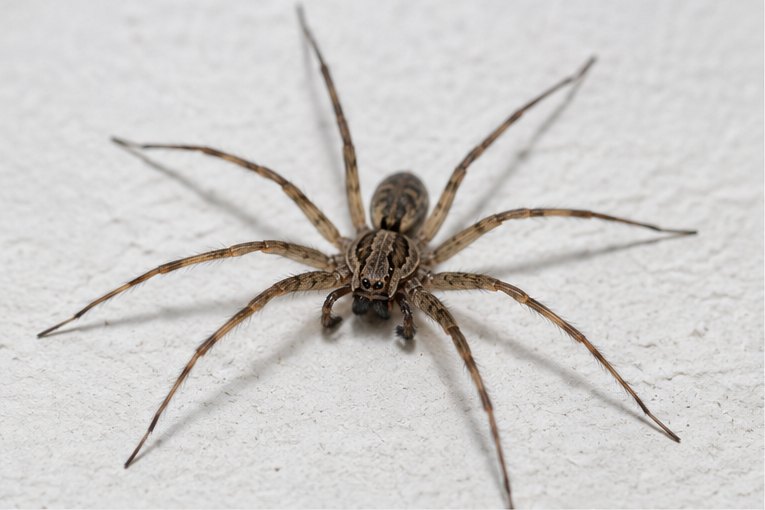
With most pests on this site, recurrence means something was missed - an entry point, an egg case, a reservoir. With spiders it usually means nothing of the kind.
Spiders live outdoors, in gardens and on buildings, in numbers, permanently. They come inside through the gaps everything else uses, and they always will. A treated building is a building whose established population has been reduced, not one that has been sealed against a species that lives in the brickwork.
So the useful question is not why they came back. It is what conditions are letting them establish once they are in.
The biggest single factor and the one most often untouched.
Spiders concentrate where the food is. Bright external lighting near doors, windows, porches and loading bays pulls flying insects in all night, and webbing accumulates exactly there. Treat the webbing, leave the lighting, and the same conditions produce the same result.
Where a property has had spider treatment twice and nothing has changed about what is lit at night, that is worth addressing before booking a third.
The genuine treatment-side cause, and the reason web removal comes first rather than last.
An egg sac is a pale rounded silk parcel in or near a web. Clearing webbing without removing the sacs leaves the next generation in place, hatching into the same corners a few weeks later.
If you clear webs yourself between visits, this is the single thing to be thorough about.
Frequently mistaken for recurrence, and it is not.
Mature male house spiders leave their webs in late summer and early autumn to look for females, which is why large spiders appear indoors every September in every building in the country. A property treated in June will still have that in September, and it means nothing about the treatment.
The distinguishing question: is it wandering individuals, or is it webbing returning quickly across multiple areas? The first is the season. The second is a population.
The test that separates them. Clear the webbing thoroughly, note the date, look again in a week. Largely clear means ordinary building and ordinary spiders. Substantially back within days means a population being fed by something.
These support far larger populations than living space, and they are frequently left out of a domestic treatment because they are not where anybody is bothered.
A treated house with an untreated garage next to it is a treated house with a reservoir attached. If webbing keeps returning in the rooms nearest a garage, cellar or utility area, that is usually why.
Spider control is one of the few pest problems where routine householder action genuinely does most of the work.
Clearing webs and egg sacs monthly - ceiling corners, window reveals, door surrounds, frame edges, under furniture - substantially reduces a population over time, because a spider that must rebuild constantly in a place with no accumulating catch tends to move on.
A property that is treated annually and never cleared in between is paying for something it could largely do itself.
For a house: substantially less webbing, cleared easily when it appears, and the autumn wanderers dealt with by a glass and a piece of card. Achieved mostly by lighting and a monthly clear rather than by treatment.
For commercial premises: a planned programme with an interval set by how fast webbing actually returns - measured rather than assumed - combined with changes to external lighting and insect load. That is a maintained standard rather than a solved problem, and it should be sold as such.
| What is happening | What to do |
|---|---|
| Large spiders indoors in September | Nothing. It is seasonal. |
| A few webs after a month | Clear them. That is normal. |
| Webbing back within days across several areas | Worth a conversation - something is feeding the population. |
| Webbing returning in one area only, near a garage or cellar | That area probably needs including |
| Commercial webbing at the agreed interval | The programme is working - that is what the interval is for |
A business cannot rely on a householder's monthly routine, so the useful question is not whether webbing returns but how fast - and the interval should be measured rather than assumed.
A programme priced on a fixed monthly visit regardless of what is actually happening is a subscription rather than a service. The interval should be a finding.
Usually because they live outside and a building is not sealed against them. A treatment reduces an established population; what keeps it down is the lighting, the webbing routine and the gaps.
No. Mature male house spiders wander indoors looking for a mate every autumn, in every building in the country. Wandering individuals are the season; webbing returning quickly across several areas is a population.
Clear webs and egg sacs monthly - ceiling corners, window reveals, door surrounds, frame edges. It genuinely reduces a population over time and it is the single most useful thing a householder can do.
Garages, cellars and outbuildings support far larger populations than living space, and they are often left out of a treatment. If webbing returns in the rooms nearest one, that area probably needs including.
No, and we would not claim to. Spiders come in from outside through ordinary gaps. What is achievable is substantially less webbing and a property that is easy to keep on top of.
The rest of the spiders advice centre, and the service page it all links back to: Spider Control Greenwich.
You do not need help knowing you have spiders. Every building in Britain has them. The question worth answering is whether you have a problem - and…
Read the guide →Most of what actually reduces spiders in a building costs nothing and has nothing to do with insecticide. Here is the order to do it in, and where…
Read the guide →Spider control is £180 for the first area and £60 for each additional one. This is the price guide that tells most of the people reading it not to…
Read the guide →A reference for telling apart the spiders you actually find indoors - and, more usefully, for reading the webs, because the web tells you which…
Read the guide →Tell us what you have seen and where in the property you found it, and we will confirm the service and the price before anything is booked.
£180 for the first room and £60 for each additional room. Call 020 3369 0124, send the enquiry form or message us on WhatsApp.