 Zero Pest
From £180
How Do You Know If You Have Carpet Beetles in Greenwich?
Carpet beetle announces itself in three ways, and most people notice the least useful one first. Here is what actually confirms it - and why the…
Read the guide →Carpet Beetle Control advice
Carpet beetle is the one fabric pest where treating the damaged room is only half the work. The other half is finding what has been feeding the population, and it is usually not on the floor.
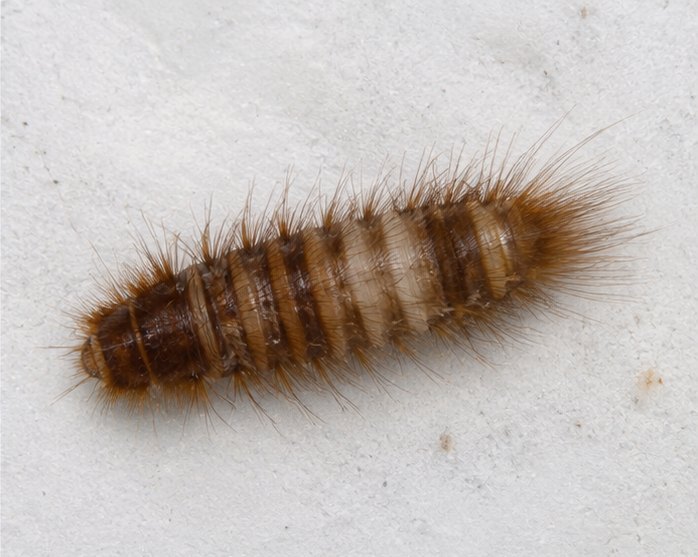
The first half is the rooms: treatment to floor perimeters, beneath furniture, along skirting lines and into affected drawers, wardrobes and storage. That deals with the larvae currently causing damage and it is necessary.
The second half is the search. Loft where it is accessible, eaves, airing cupboards, chimney breasts, and every stored textile in the property. That is what decides whether the first half lasts.
Treating the floor beneath a reservoir buys a few good months. It does not outlast the reservoir.
Tell us about the loft at the enquiry. Whether you have access, and whether there has ever been a bird, wasp or bee nest up there. That single answer usually predicts which of the three you are in, and it shapes the visit.
Leave treated floors and cupboards alone for the period we specify on the day. Cleaning removes the treatment before it has dealt with what is still to emerge.
After that, the ongoing measures are the same ones that work against carpet moth: vacuum the edges and under the furniture regularly, move things occasionally, and do not let stored wool sit untouched for years. Undisturbed conditions are what both pests need.
Where the survey finds old nesting material, dealing with it does two things beyond the pest problem: it removes a reservoir that would otherwise feed the next population, and it usually means closing an opening at the roofline that let the bird in - which is worth having closed anyway.
That last part may be proofing work at £180, up to 1 hour, or it may be a roofing repair, depending on what is failing. We will tell you which rather than quoting for something we should not be doing.
Common, and it changes what gets treated rather than whether.
Carpet beetle is entirely willing to work through stored wool clothing, and where the damage is in a wardrobe rather than on the floor the population is living in the storage. Treating the carpet in that room will not reach it.
If there is damage in a wardrobe and on the floor, tell us both - it does not usually change the room count and it changes what gets done within the room.
Yes - the survey covers the loft where it is accessible, the eaves, airing cupboards, wardrobes and stored textiles. What is not included is roofing work to reach a nest behind a sealed roofline, which is a different trade.
Please do not. Bagging up old material and carrying it down through the house is how a contained problem gets distributed through every room on the way. Leave it until it has been looked at.
Then we will describe what we believe is there and where, and a roofer will quote opening it up. What we will not do is keep treating the carpet underneath it and charging you each time.
Hot wash it if the fabric allows, have it professionally cleaned if not, or bag and dispose of it if it is badly damaged. Do not store it elsewhere in the property.
Not on its own. A new wool carpet laid into an untreated room is fresh food for the existing population - and if the source is in the roof, it is fresh food with a supply line.
The rest of the carpet beetles advice centre, and the service page it all links back to: Carpet Beetle Control Greenwich.
Carpet beetle announces itself in three ways, and most people notice the least useful one first. Here is what actually confirms it - and why the…
Read the guide →Carpet beetle treatment is £180 for the first room and £60 for each additional one. The published price covers the rooms. Whether it covers the whole…
Read the guide →A reference rather than a checklist. Every stage of the insect, every mark it leaves, and a side-by-side comparison with carpet moth - because that…
Read the guide →Of every pest on this site, carpet beetle is the one where recurrence has the most predictable cause - and it is almost never the treatment. It is a…
Read the guide →Tell us what you have seen and where in the property you found it, and we will confirm the service and the price before anything is booked.
£180 for the first room and £60 for each additional room. Call 020 3369 0124, send the enquiry form or message us on WhatsApp.