 Zero Pest
£90 fixed cost – guaranteed
How Do You Know If You Have Wasps in Greenwich?
Seeing wasps is not the same as having a nest, and a great many people book a treatment for a nest that turns out to be three gardens away. This…
Read the guide →Wasp Nest Removal advice
A wasp nest is the one job on this site where the main argument against doing it yourself is not that it will not work - it is that most of the serious injuries happen on a ladder.
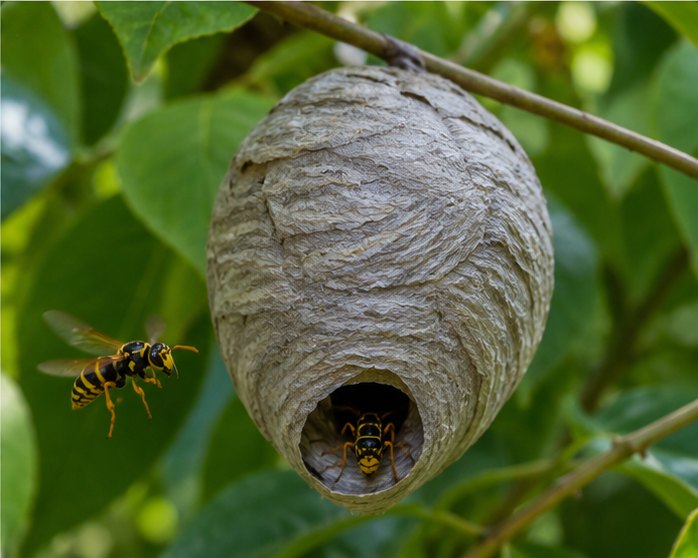
Aerosol nest killers cost a few pounds and they do something. So this is not an argument that DIY never works. It is an argument about what happens when it goes wrong.
A disturbed colony defends itself, and wasps can sting repeatedly - unlike a honey bee, a wasp does not lose its sting and stop. When people are badly hurt treating a nest themselves, the injury is usually not the stings. It is falling off a ladder while being stung, several metres up, with both hands occupied.
That is the actual risk profile, and it is not proportionate to the saving.
It is the most intuitive response and it is close to the worst one.
A sealed nest does not give up. The colony looks for another way out, and in a cavity wall or a roof void the other way out is frequently into the room on the other side. People who have filled a soffit gap with expanding foam in the evening have found wasps coming through a light fitting the following day.
The same applies after a treatment. Leave the entrance open.
Knowing what to expect here prevents most of the calls we get from people who think a treatment has failed when it has not.
A nest that is completely silent within the hour would be the surprise rather than the norm. If there is still real activity after a couple of days, that is when to call - and it is what the guarantee is for.
The price is the same all season. The job is not.
An early nest is small and the colony is a fraction of its eventual size. By late summer nests are at their largest and wasps are at their most assertive, which is exactly when most people call. If you have found a nest in May, dealing with it then is easier for everybody than dealing with the same nest three months later.
Say so and we will tell you honestly. Bees are not treated as a matter of routine. A honey bee swarm is normally a job for a local beekeeper, who will usually collect it, and sending somebody to treat a swarm that could have been collected is not a service worth selling.
Bumblebee nests are small, short-lived and generally need nothing doing at all - they are finished by late summer on their own.
This is the part that gets left off most wasp pages, because it is not a wasp treatment. A new queen chooses a building in spring because of the structure - a gap at a soffit, a missing air brick cover, an opening under a tile - not because of last year's nest.
So the thing that reduces the odds of a nest next year is closing those openings, which is proofing work at £180, up to 1 hour rather than pest control. It is worth doing on a property that has had a nest two years running, and it is worth doing after the season rather than during it.
A recurring situation, and it has three explanations worth working through before assuming there is a nest in the structure.
The distinguishing question is consistency. Wasps that appear on hot days and not on cool ones are coming in from outside. Wasps that appear steadily in one room regardless of the weather are coming from inside the structure.
You can buy a product that does something. The reason not to is the ladder: most of the serious injuries from DIY wasp treatment come from falling while being stung, not from the stings themselves. Never do it at height, in a confined space, or if anyone at the property has a sting allergy.
No - it is close to the worst thing you can do. A sealed colony looks for another way out, and in a cavity wall or roof void that frequently means into the room on the other side.
Almost certainly. Foragers that were away from the nest return and carry the treatment in with them, so activity continues for a period and then drops. Complete silence within the hour would be unusual.
They catch foraging workers and do nothing to the colony. Hung near a seating area they can draw more wasps in than they remove.
The colony does die off eventually, and in the meantime it is at its largest and most defensive through exactly the weeks you would want to use the garden.
A new queen chooses the structure, not last year's nest. Closing the openings she would use - soffit gaps, missing air brick covers, gaps under tiles - is proofing work, and it is best done after the season rather than during it.
The rest of the wasps advice centre, and the service page it all links back to: Wasp Nest Removal Greenwich.
Seeing wasps is not the same as having a nest, and a great many people book a treatment for a nest that turns out to be three gardens away. This…
Read the guide →Wasp nest treatment is £90 - one fixed cost, guaranteed, wherever the nest is on the property. This guide explains what "fixed" actually means here,…
Read the guide →A reference rather than a checklist. Every sign a wasp nest gives away, what a nest looks like at each point in the season, and how to tell a wasp…
Read the guide →A nest in the same roof three summers running feels like a recurring problem. It is not - it is three different colonies choosing the same building,…
Read the guide →Tell us what you have seen and where in the property you found it, and we will confirm the service and the price before anything is booked.
£90 fixed cost, guaranteed. Call 020 3369 0124, send the enquiry form or message us on WhatsApp.